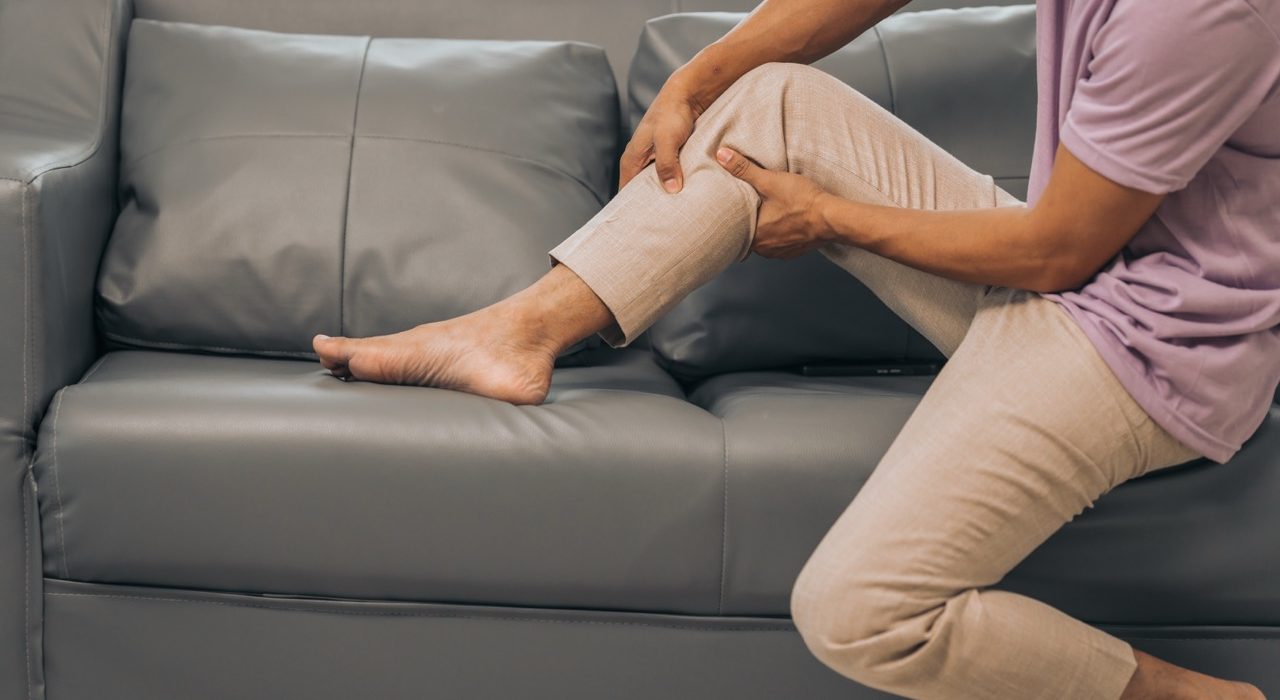
Heavy and tired legs can happen after a long day, but recurring heaviness may point to more than ordinary fatigue. One possible cause is poor blood flow from peripheral artery disease, or PAD. PAD develops when plaque narrows arteries that carry blood to the legs and feet.

Some people describe PAD as cramping. Others notice heaviness, weakness, aching, or fatigue. The pattern matters. Symptoms that appear during walking and improve after rest deserve attention.
Why Poor Circulation Can Make Legs Feel Heavy
Your leg muscles need oxygen-rich blood to work. During walking, they need more blood than they do at rest. If an artery is narrowed, blood flow may not rise enough to meet that demand.
As a result, the muscles may feel heavy, weak, tight, or tired. This is a form of exertional leg discomfort. It can occur in the calves, thighs, hips, or buttocks.
When Heavy Legs May Point to PAD
Heavy legs can have many causes. However, PAD becomes more likely when the symptoms follow a repeatable pattern.
- Heaviness starts after walking a certain distance.
- The legs improve after several minutes of rest.
- The same symptoms return when walking resumes.
- One foot feels colder than the other.
- There is numbness, weakness, or tingling.
- A sore on the foot or toe heals slowly.
This walking-rest-walking pattern is often called claudication.
Could Heavy Legs Be Caused by Vein Problems?
Yes. Venous disease can also cause aching, swelling, or heaviness. Vein-related symptoms often become worse after prolonged standing and may improve when the legs are elevated.
PAD is different because it involves arteries, which deliver blood to the legs. PAD symptoms often become more noticeable during activity. A vascular evaluation can help determine which circulation problem may be present.
Other Conditions That Can Cause Tired Legs
Joint disease, spinal problems, neuropathy, anemia, medication effects, and muscle conditions can also cause leg fatigue. That is why symptoms should not be diagnosed based on heaviness alone.
Your healthcare provider may ask when the symptoms begin, what makes them better, and whether you have risk factors for vascular disease.
Who Is at Higher Risk for Poor Circulation?
PAD risk increases with smoking, diabetes, high cholesterol, high blood pressure, kidney disease, older age, and other cardiovascular disease.
If you have several of these risk factors and your walking distance has decreased, circulation should be considered as one possible cause.
How Is Leg Circulation Tested?
A common first test is the ankle-brachial index, or ABI. It compares blood pressure at the ankle with blood pressure in the arm. An abnormal result can support a diagnosis of PAD.
Additional testing may include Doppler ultrasound, duplex ultrasound, toe pressures, CT angiography, magnetic resonance angiography, or other vascular imaging.
Learn more about PAD testing and treatment available through Vascular Centers of America.
Can Heavy Legs Improve With Treatment?
When PAD is present, treatment depends on the severity of disease. Care may include smoking cessation, cholesterol management, blood pressure control, diabetes management, medication, and structured exercise.
Some patients with persistent, functionally limiting symptoms may also be evaluated for procedures that improve blood flow.
Do Not Assume Heavy Legs Are Just Aging
It is easy to reduce activity gradually and assume that tired legs are simply part of getting older. However, a change in how far you can walk may be meaningful.
At Vascular Centers of America, our team evaluates patients with leg heaviness, walking discomfort, and other symptoms of poor circulation.
If heavy and tired legs are limiting your daily activity, contact Vascular Centers of America for a circulation evaluation. You can also review our vascular center locations.