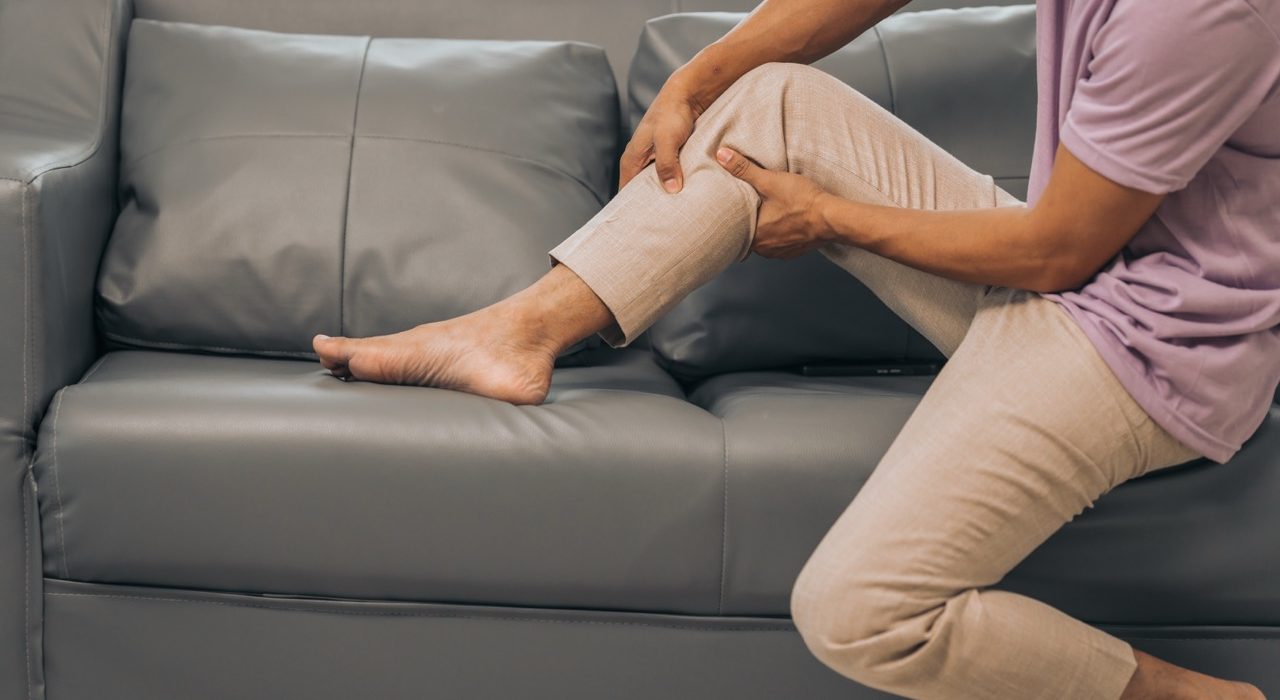
Calf pain while walking can come from several different problems. A sore muscle is common. A blood clot is more urgent. Peripheral artery disease, or PAD, can also cause calf discomfort that appears during activity and improves with rest.

The pattern of pain often provides useful clues. However, symptoms can overlap, so persistent or severe calf pain should be evaluated rather than diagnosed at home.
How a Muscle Strain Usually Feels
A calf strain often follows a specific activity or movement. You may remember pushing off quickly, climbing, running, lifting, or stretching the muscle.
The area may feel tender when touched. Pain can worsen when you flex the ankle or use the calf muscle. A strain may also cause swelling or bruising.
Unlike PAD, muscle pain does not always stop within a few minutes simply because you stop walking.
How PAD Causes Calf Pain While Walking
PAD narrows arteries that carry blood to the leg muscles. During walking, the calf needs more oxygen-rich blood. If the artery cannot deliver enough, discomfort develops.
PAD-related calf pain is called claudication. It may feel like cramping, aching, burning, tightness, heaviness, or fatigue.
A classic clue is repeatability. Pain may begin after roughly the same walking distance, improve with several minutes of rest, and return when walking resumes.
What About a Blood Clot?
A blood clot in a deep vein, called deep vein thrombosis or DVT, is different from PAD. DVT involves a vein, while PAD involves arteries.
DVT can cause calf pain, swelling, warmth, tenderness, or redness. Symptoms may occur even when you are not walking.
A suspected blood clot requires prompt medical evaluation because a clot can travel to the lungs and cause a pulmonary embolism.
When Calf Pain May Be an Emergency
Seek urgent medical care if calf pain is accompanied by sudden swelling, chest pain, shortness of breath, coughing blood, or fainting.
Sudden severe leg pain with a foot that becomes cold, pale, numb, or weak can also represent acute limb ischemia. That is a vascular emergency.
Other Signs That Point Toward PAD
Calf pain is more suspicious for PAD when you also notice:
- A colder foot on the affected side
- Numbness or weakness
- Reduced hair growth on the lower leg
- Skin color changes
- A wound that heals slowly
- Foot pain while resting
Risk factors also matter. Smoking, diabetes, high cholesterol, high blood pressure, kidney disease, and older age all increase the likelihood of PAD.
How Is PAD Tested?
A vascular specialist may check pulses and perform an ankle-brachial index, or ABI. The ABI compares blood pressure in the ankle with pressure in the arm.
Ultrasound and other vascular imaging can provide more information when needed.
Learn more about PAD testing and treatment at Vascular Centers of America.
Why the Correct Diagnosis Matters
A muscle strain, DVT, and PAD require very different treatment. Assuming that recurring calf pain is simply a muscle problem can delay vascular testing. At the same time, sudden swelling should not be treated as routine PAD without ruling out a clot.
A careful history, examination, and appropriate testing can separate these possibilities.
Do Not Ignore Repeatable Walking Pain
If your calf repeatedly hurts when you walk and improves when you stop, circulation should be considered.
At Vascular Centers of America, our specialists evaluate activity-related leg pain and other symptoms of poor circulation.
If calf pain while walking is limiting your activity, contact Vascular Centers of America for a vascular evaluation. Find a nearby office on our locations page.